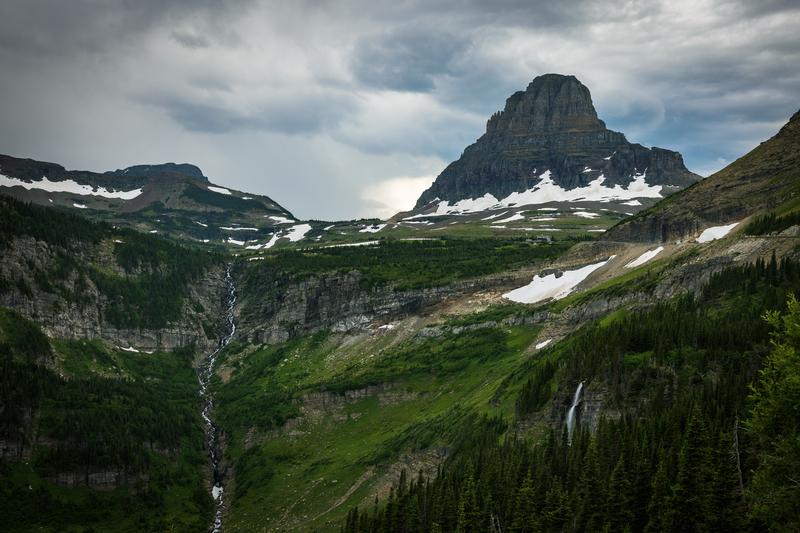
Giant, towering monoliths rising to the sky across lush, green, glaciated valleys, filled with the most magnificent alpine lakes you will see in the lower 48.
The long journey was over. I had finally arrived at Glacier.
Of the two major entrances into Glacier, I had picked the more picturesque one (debatable) that boasted one of the most scenic lakes in the continent right at its doorstep.
Saint Mary’s Lake
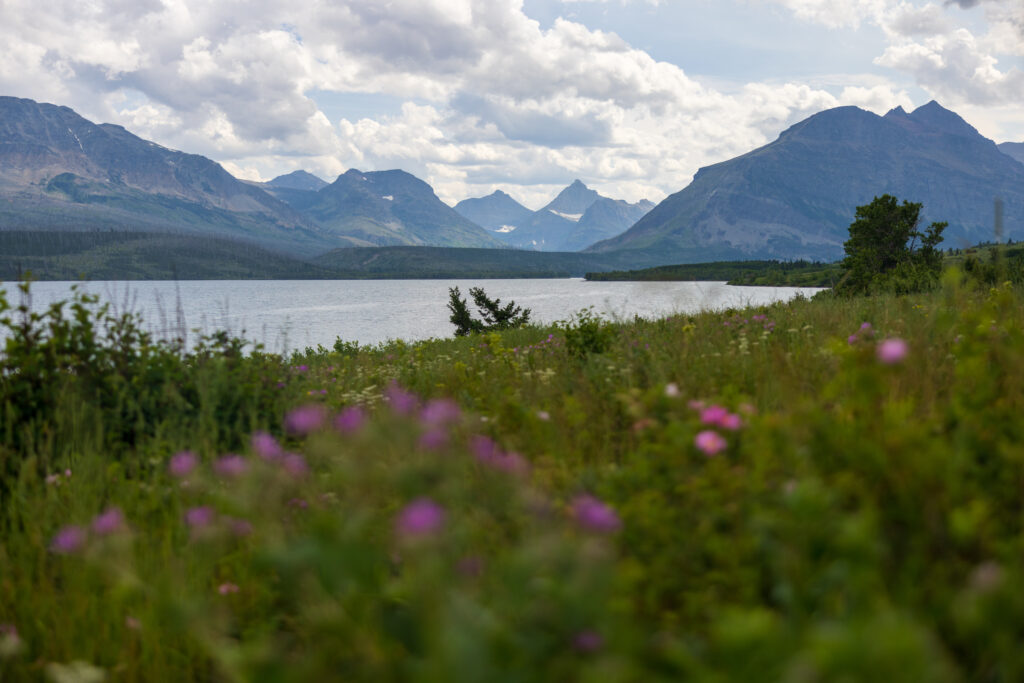
Slowly driving by green, wildflower-laden meadows in the peak of summer and one’s youth and tracing the view until the gaze reached an azure, slender lake, punctuated in the distance by the most prominent monoliths rising from the American mainland – nothing can quite capture a person’s imagination as this exquisite frame. I like to approach the exercise of spending time at a scenic overlook with some degree of tactical exactitude, particularly when the day’s destination is still a long way off. But, this view demanded that such rigor be tossed aside and one just immerse oneself in the sublime view that unfolded in front of the eyes.
And, it had started raining (just like in the movies). I had to find a proper frame and put the cowboy hat that I had bought near Helena to use.
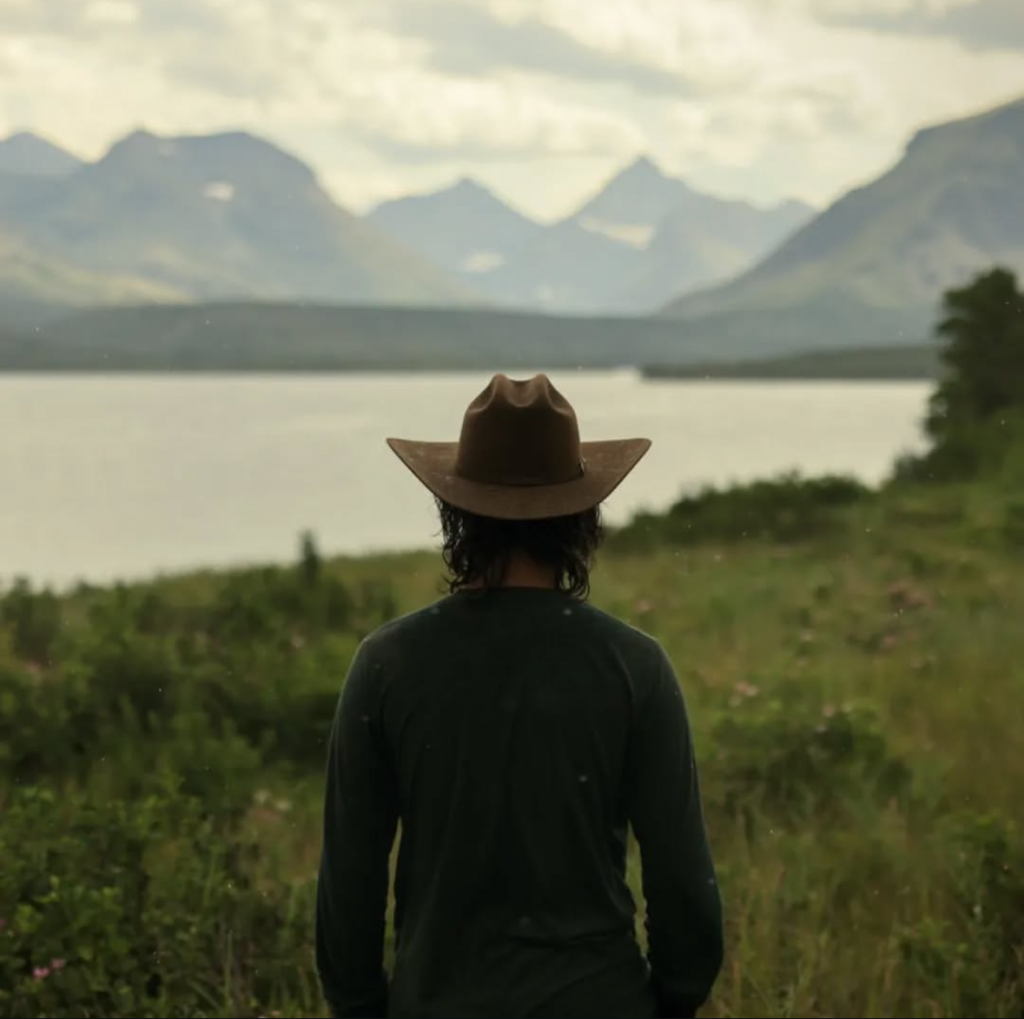
At that time, I didn’t think much of the picture (except maybe an “Ahh – that looks cool”). But, now that I revisit the frame several years later, I feel like this picture represented the spirit of that trip – that visceral feeling of awe, wonder, and melancholia that tends to emanate out of every sublime landscape out west.
I wished that time would freeze at that moment, on that day, forever. But, needless to say, one gets yanked out of that yearning pretty early – whether it be by the loud rumblings of your travel companions, by a clap of approaching thunder, or by passing traffic. I think all three contributed to me snapping back out of my trance, but not so much as a concurrent, competing urge to make as much of the day’s light as possible (which I think is a microcosm of my take on the urgency with which one should move through life at times).
The next stop – oh boy, this is as iconic as it gets.
Wild Goose Island Overlook
Tracing Saint Mary’s western shore southbound along this stunning route, carved along the rock faces, one soon reaches a pretty heavily trafficked overlook, the view from which it’s very likely that one has seen at least once somewhere at some point in their lives.
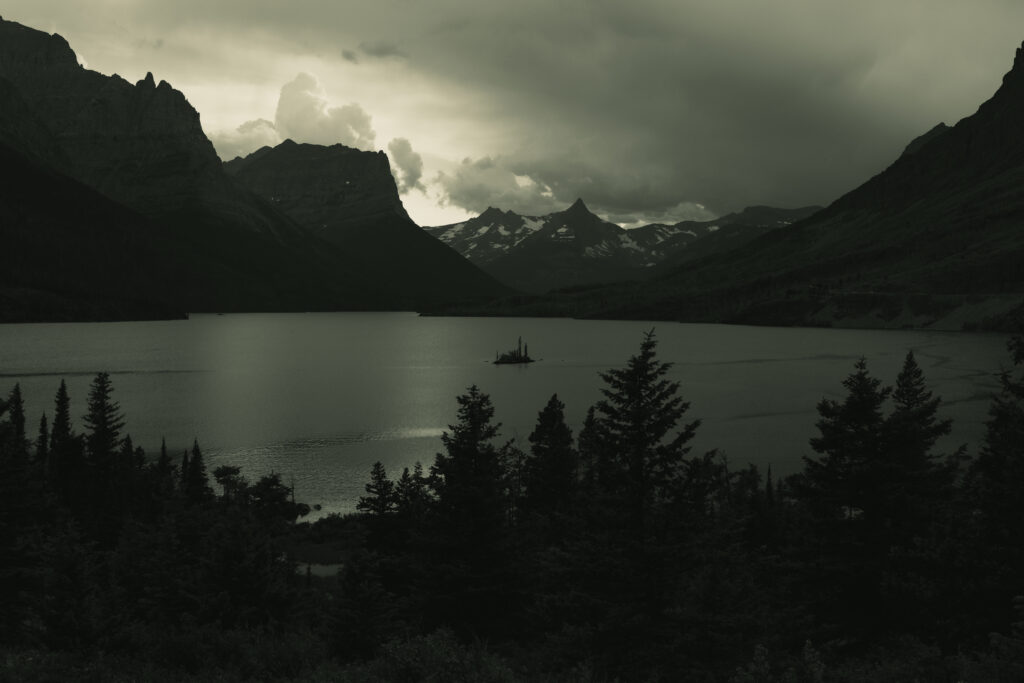
This view of Wild Goose Island, with the mighty peaks of Lewis Range towering in the distance.
This frame can be identified by countless iconic photographs made at the same location over the years, but maybe no series of frames is as iconic as the opening sequence of Stanley Kubrick’s 1980 classic The Shining, as the POV drone flies to Wild Goose, takes a sharp right and then follows Jack Nicholson’s character as he makes his way to the hotel in Colorado (which in reality would be the Going to the Sun Road leading up to Logan Pass, further up the road; only that the frame ends at the Timberline lodge on Mount Hood, Oregon – all, of course, packaged as Colorado. Talk about an eclectic mix of amazing shooting locations and Colorado getting to keep those places, albeit in fiction.)
I am no painter, but I can easily imagine a painter envisaging this frame to be an exquisite subject that deserves to be brought to life by the masterful strokes known to their brush.
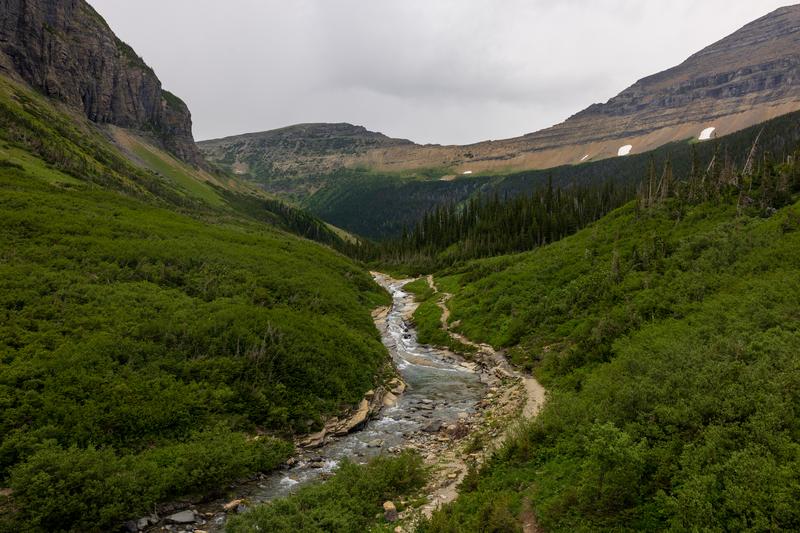
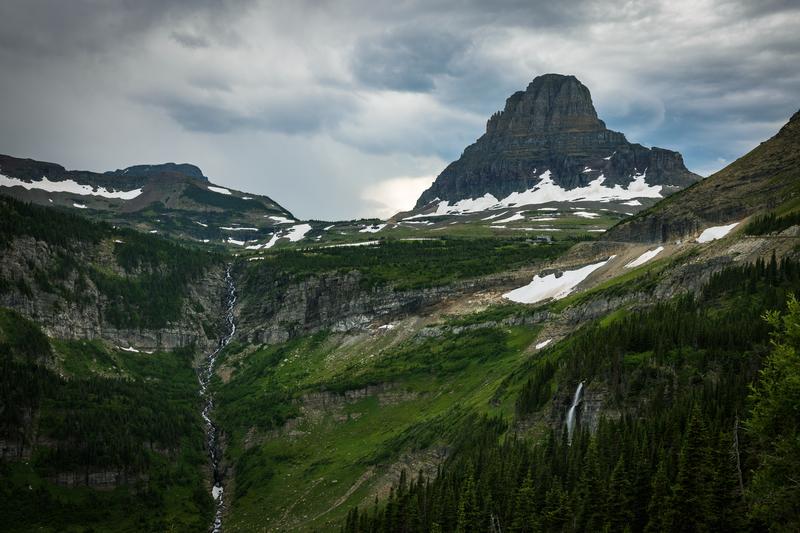
The road goes on and now carves its way through the deep, glacial ravines flanked by gigantic monoliths. The view of Jackson Glacier, the crossing of the creek at Siyeh Bend, the view of enormous waterfalls, the names of which I do not know, roaring down the mountainside – all of these iconic landmarks build up to the apogee of the drive, at the continental divide at Logan Pass, the road to which truly makes one feel as if one were going to the sun, the essence of which is captured perfectly by this beloved, eponymous road.
Logan Pass
At 6,647 feet, Logan Pass isn’t the highest, but it is certainly among the most spectacular in the country. While Reynold’s mountain forms the perfect backdrop for the ever-bustling visitor center, I found my attention drawn to the enormity of the parking lot and to the fact, that despite its size, how difficult it was to secure parking there. After finding a suitable spot and deciding to go out on a brisk walk to the Continental Divide sign, a group of male bighorn sheep (aka rams) crossed the parking lot and made their way through the frenzy of the still significant human crowd.
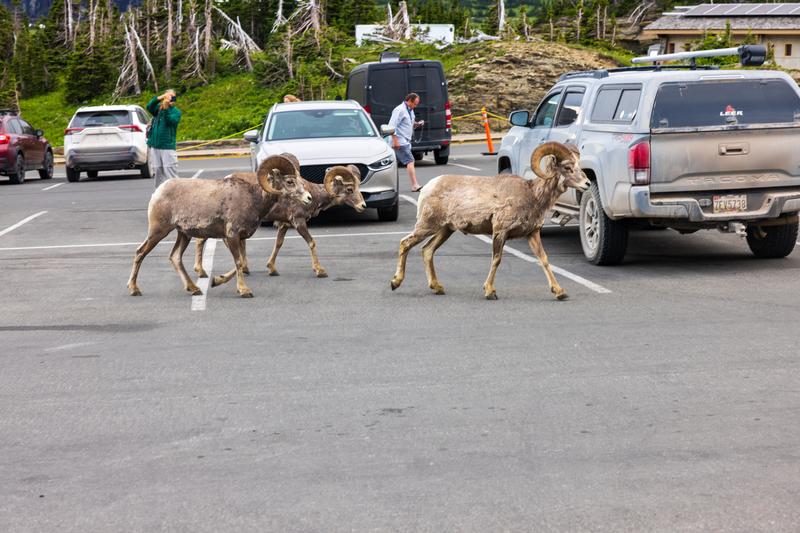
I fumbled around the car for my 500 mm, but I think I was too slow, and this activity, in hindsight, might have led me to miss my propinquity to these beautiful creatures, as I would be joining the graduate program at Colorado State a month later, and would officially be a Ram myself (Go Rams!).
I made it up to the clearing beyond the Visitor Center, got myself a long, fulfilling look at the sheer bulk of Mount Reynolds, and then headed back.
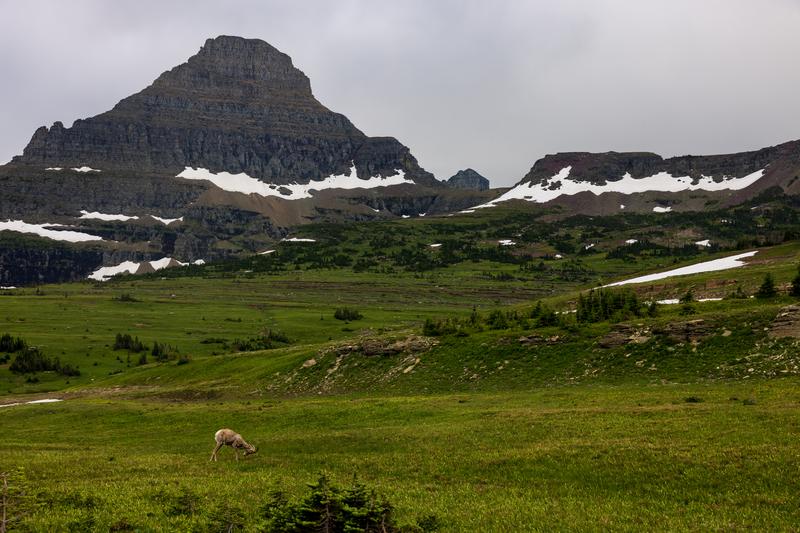
The sun was going down, and the tactical urgency of reaching the destination (Kalispell) was picking up.
It was time to head down the West side of the road. The light was fading, but the drive is still as vivid in my memory as if it were yesterday. The road to the west is much narrower compared to the segment from Saint Mary’s to the pass. However, it is still as beautiful and as iconic as the eastern end, if not more popular and accessible. On this day, however, I blazed through the tight curves and remarkable tunnels along this segment and made it to the stretch along Lake McDonald as the sun set beyond the horizon. I remember being impressed by the sheer size of the lake as the drive along its shore might’ve taken more than 15 minutes.
Common sense would’ve dictated that I stop by the lake to enjoy its iconic, Instagram-worthy silhouettes, but the cabin was calling, and I knew I would be returning the next day to soak in the views in broad daylight.